We’re happy to help at: objednavky@naboso.cz
When choosing footwear, it is essential to ensure that the type, size, and width precisely match your needs. The shoe size (length of the internal space) must always be longer than your foot length. The shoe must have what is called an allowance in length (free space inside the shoe before the toes) and allowance in width (the shoe must not be narrower than your foot). The allowance allows free movement and natural rolling of the foot. In children, the allowance also provides space for foot growth. Your toes should never touch the tip of the shoe while walking. You should be able to comfortably spread your toes inside the shoe. Pay attention to the suitability of the material and sole for the intended purpose of the footwear. An improperly chosen type, size, or shape relative to your foot cannot be the reason for later complaints.
Different types of footwear are suitable for different uses. The intended purpose influences the choice of materials, construction, design, and maintenance of the shoes. Please consider the intended use when selecting footwear.
• Always wear shoes properly fastened and laced to avoid damage to internal parts such as the insole or heel.
• Always put on and take off shoes with laces or fasteners undone. Never remove them by pulling one shoe over the other. Use a shoehorn.
• Alternate shoes and do not wear the same pair daily.
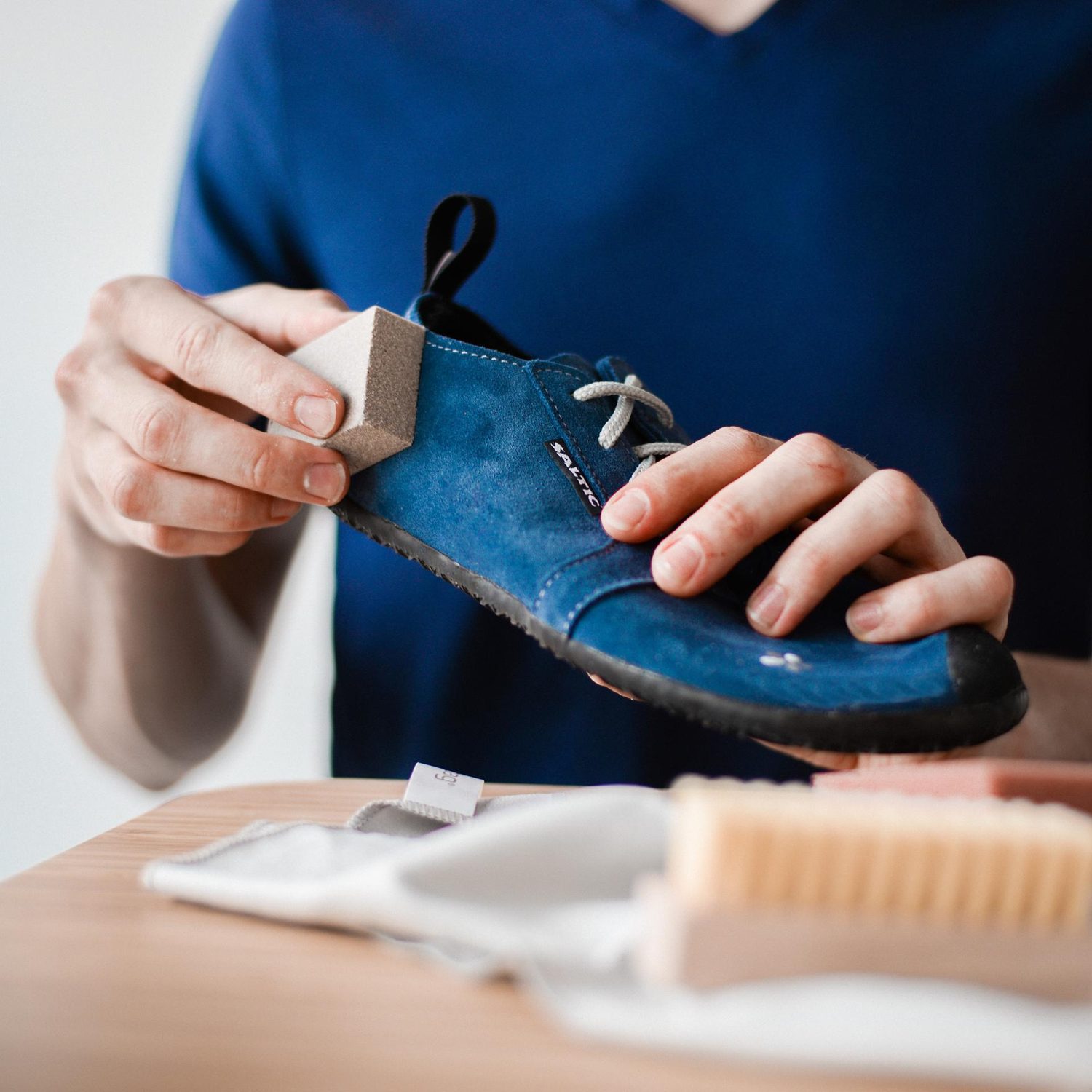
• Before first use, impregnate and treat shoes with suitable care products; continue as needed.
• Dark and intense leather colors may initially bleed with increased sweating or moisture (these colors are safe and non-toxic).
• Uneven grain patterns, slight color differences, and natural marks (scars, wrinkles) are not defects but characteristic features of natural leather.
• Road salt and chemicals used in winter can damage shoe materials, causing swelling and light spots. Limit exposure to such substances. After use, wipe off snow and moisture. Properly treated shoes resist these effects better. Shoes damaged this way cannot be claimed.
• Do not wash shoes in the washing machine unless the manufacturer explicitly permits.
• Do not dry shoes in a dryer or on hot heating devices.
• Wear shoes only when dry. After wet use, dry shoes thoroughly as soon as possible. Remove insoles when drying, if possible.
• Consult the seller about the most suitable care products for your shoes when purchasing.
Remove the insole (if removable) and stuff wet shoes with newspaper. Dry at room temperature. Allow shoes to dry completely before wearing.
Many materials are used today, ranging from various types of leather to synthetic and textile materials. Basic knowledge about these materials and proper maintenance extends your footwear's lifespan. Leather is the most commonly used natural material, breathable, soft, highly absorbent, and somewhat adaptable to the foot's shape. Uneven grain and surface differences are characteristic of natural leather, distinguishing it from synthetics. Leather is not fully resistant to moisture from outside (weather) or inside (sweat), so it requires constant care. We distinguish several types of leather:
You can file a complaint about the goods with a proof of purchase or another credible document (e.g., payment by card or bank transfer statement). Please report defects immediately after discovery; late complaints will not be considered. Complaints may be rejected for hygienic reasons in accordance with the Health Protection Act No. 258/2000 Coll. if the complained goods are dirty, wet, or otherwise hygienically unacceptable. After removing these defects, the complaint will be accepted and processed again. Assessment of the complaint's validity and its resolution takes no longer than 30 calendar days from the receipt of the goods into the complaint process. A defect cannot be considered if it is caused by normal wear, improper use, or intervention. The complaint applies only to defects caused by material or manufacturing.
§ 2107 of the Civil Code: If the defective performance is a minor breach of contract (i.e., the defect is removable), the buyer has the right to have the defect removed, have the defective part replaced, or receive a reasonable discount on the purchase price.
§ 2106 of the Civil Code: If the defective performance is a substantial breach of contract (the defect is serious, irremovable, or several defects occur at once), the buyer has the right to:
How can I file a complaint about goods?
The complaint period should not be confused with the product’s lifespan, i.e., the period during which the product can last with proper use and care, considering its properties, intended purpose, and varying intensity of use.
The shoes just arrived, but would a smaller or larger size fit you better? Or have you decided on a different model? Simply withdraw from the purchase contract. It’s very easy. See how to return goods.
Call us on working days from 10 am to 4 pm at +420 228 224 478 or email objednavky@naboso.cz.
Address: naboso s. r. o., Českomoravská 2517/13a, Prague 9 - 190 00
You can also find us at stores in Prague, Brno and Zlín.